The EUROVINO Advisory Board

The Advisory Board of EUROVINO is composed of the following experts:

  • Dr. Hermann Pilz, Chairman of the Advisory Board
  • Andreas Behrens, EDEKA Familie Behrens
  • Björn Keyser, Owner REWE Keyser
  • Michael Kugel, „Die Weinreferenten“
  • Jessica Borowski, ECOVIN
  • Martin Schmidt, Friedrich Kiefer KG Privatkellerei – Weingut
  • Claudia Stern, Wine & Glory
  • Christopher Streeck, EDEKA Streeck
  • Barbara Wanner, Organize Communciations GmbH
  • Holger Willy, Rolf Willy GmbH
  • Katja Felke, Silkes Weinkeller
  • Jasmin Ohlendorf, Renthof Kassel
  • Christian Nesbeda, Bührmann Weine GmbH
  • Alexander Marschall, vinocentral GmbH

The advisory board represent the most important target groups of the wine industry, both on the supplier and on the buyer side.

Find out more in the interviews!
Interviews

2026-10-06
Interview with Jasmin Ohlendorf

Jasmin Ohlendorf, General Manager of Renthof Kassel

What makes wine so special to you?

To me, wine is far more than just a drink. Wine tells stories - of people, landscapes, traditions, craftsmanship and, sometimes, of entirely new ideas. That is precisely what fascinates me - and our guests too.

In the hospitality industry, there is another crucial aspect: wine brings people together. A good wine recommendation can transform an evening, allow a dish to be experienced in a completely different light, and spark conversation. I particularly like the fact that wine is both emotional and incredibly multifaceted. You could spend a lifetime exploring it and still discover something new time and time again.

What is your favourite European wine?

My current favourite wine is actually on our own wine list at the Renthof: a dry organic Grenache from the Reibold winery in the Palatinate.

What I particularly like about this wine is that, for me, it beautifully illustrates what wine can be all about: character, craftsmanship and, at the same time, uncomplicated enjoyment. And perhaps that’s also part of what makes it a favourite for me - that I not only enjoy drinking it myself but can recommend it to our guests with conviction.

That said, I expressly reserve the right to change my favourite wine from time to time. After all, that’s precisely the beauty of wine: there’s always something new to discover.

With so many European wine-growing regions, do you have a favourite?

I really don’t want to commit to just one wine region. For me, it’s precisely the differences that make European viticulture so fascinating. Soil, climate, grape variety and the winemakers’ individual styles ensure that every region tells its very own story.

At the Renthof, we predominantly source German wines because we are committed to a regional sourcing concept.

So, let’s take a look at the Moselle, for example: slate soils and Riesling are inextricably linked here. Or Burgundy, where limestone and marl-rich soils play a crucial role in shaping the character of Chardonnay and Pinot Noir. And then there’s the Palatinate, which in turn offers an enormous variety of soils, grape varieties and wine styles - and which, incidentally, is also where my current favourite wine comes from.

It is precisely these differences that I find fascinating. For me, therefore, a wine region doesn’t necessarily have to be ‘the best’. A far more interesting question is: what makes this place, this soil and, ultimately, this wine so distinctive?

Which wine-growing region in Europe do you currently consider to be an insider’s tip or one on the rise?

If I had to name a European hidden gem today, I’d say Slovenia.

The country has an incredibly fascinating wine culture and combines very different climatic and geological conditions within a small area. I find the many regional and indigenous grape varieties particularly interesting.

That’s precisely where I see the opportunity. In the hospitality industry, we find that guests are curious and are certainly keen to try something new when we tell them the story behind it.

And perhaps that is exactly my definition of an insider tip: a wine that the guest doesn’t know at first but, after the first glass, is keen to discover more about.

You are the hotel manager at Renthof Kassel - what issues and challenges are you currently facing most in your day-to-day work?

The hotel and hospitality industry is going through an incredibly exciting, yet challenging, period. We’re focusing intensively on staff retention and health management, training, rising costs, sustainability, digitalisation and, of course, the changing expectations of our guests.

For me, one question keeps coming back to the fore: how do we manage to operate successfully from a business perspective whilst maintaining genuine hospitality?

Because, despite all the digital possibilities and necessary processes, there is one thing we must not forget: our industry thrives on people. Guests want to be seen, understood and delighted. And for that, we need staff who enjoy their work and can pass on this enthusiasm with passion.

To what extent can trade fairs such as EUROVINO offer solutions to these issues?

Trade fairs such as EUROVINO create something that is particularly valuable today: personal interaction.

They bring together producers, retailers and the hospitality sector, facilitating conversations for which there is often no time in day-to-day operations. We can discover new products, spot trends at an early stage and share experiences with one another.

For me, it’s not just about discovering a new wine. It’s about networking, knowledge and inspiration. A good trade fair should mean that I go home with fresh ideas and ask myself: Which of these can we implement in our own business?

The fair’s well-organised structure also enables small establishments like ours to find wines that suit us quickly and efficiently.

Let’s take the topic of staff from what’s been said: what advice would you give to those interested in the hospitality and catering sectors?

I would choose this sector again in a heartbeat: the hotel and catering industries are incredibly diverse. Hardly any two days are the same. We work with people, create experiences and get to be hosts. Young people, in particular, can take on responsibility very quickly and discover where their own strengths lie.

Of course, we as employers must also do our bit. Good leadership, appreciation, reliable scheduling, opportunities for development, modern working conditions and a training programme that takes young people seriously are, for me, crucial.

We need to show young people even more clearly just how much a training programme in the hospitality and catering sectors can offer them: interactions, creativity, responsibility, opportunities for development and an enormous variety of career paths - and a wide range of career opportunities worldwide.

You are now an advisory board member at EUROVINO yourself. What appeals to you about this role, and what aspects would you like to bring to the collaboration?

I was delighted to be asked to join the EUROVINO advisory board. I am particularly drawn to the opportunity to bring the perspective of the hospitality and catering sectors to the table.

I want to draw specifically on practical experience: what do catering businesses really need? How should wine lists evolve? Which products go down well with our guests? How do we present wine in a contemporary way without creating unnecessary reservations? And how can we inspire young staff to take an interest in wine and equip them with the necessary knowledge?

At the same time, I’m looking forward to learning myself. For me, an advisory board should not be a forum where everyone simply represents their own perspective. It becomes particularly valuable when different experiences come together and new ideas emerge from them.

Why is EUROVINO, as a trade fair format focusing on the German-speaking market, important for the industry?

Because it brings together producers and those who are ultimately very close to the guest - and therefore to the market.

For the hospitality sector in particular, it is important not just to talk about trends, but to understand what is actually in demand, which concepts work and how consumer behaviour is changing.

At the same time, a clear focus offers the opportunity to engage in more in-depth dialogue. For me, it’s not about being as big as possible or having as much as possible; it’s about relevance. When winegrowers, retailers, the hotel industry and the hospitality sector talk to one another on an equal footing, ultimately all sides benefit.

What is it that makes EUROVINO special for you personally?

For me, it’s above all the people, the encounters and the focus on what really matters.

I’d like to see a EUROVINO where you don’t just walk through the halls tasting as many wines as possible, but where genuine conversations take place. A trade fair where you discover new things, perhaps see familiar ones in a different light, and strike up conversations with people who are passionate about their product.

When I drive home after a trade fair with new contacts, new ideas and perhaps even the odd bottle of wine that makes me think straight away: ‘I’d like to show this to our guests’, then, for me, a trade fair has achieved exactly what it set out to do - and that is what EUROVINO has given me over the last few years. I’ve been there right from the start!

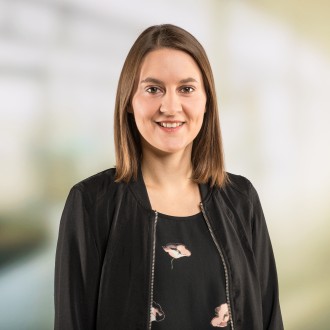
Photo Jasmin Ohlendorf by Mario Zgoll, image rights Jasmin Ohlendorf

Jasmin Ohlendorf
2026-10-06
Interview with Katja Felke

Katja Felke, Managing Director of Silkes Weinkeller, Mettmann

Where does your passion for wine come from, and what makes it so special to you?

I entered the wine industry with a background in e-commerce. My curiosity about wine has grown ever since. I want to truly understand the product we sell. The more I learn about it, the more fascinating I find it.

For me, what makes wine special is how much comes together in a single glass: origin, climate, craftsmanship and the decisions made by the people behind it. You can study it in great depth and still be surprised time and time again. And then you sit down at the table with others, open a bottle, and all these stories come together to create a shared moment.

What is your favourite European wine?

I find it hard to pick just one favourite wine. There are too many exciting wines out there, and there’s always something new to discover.

Besides, my choice depends on the occasion: what are we eating, who am I with, and what I’m in the mood for at that moment? So, my favourite wine is certainly bound to change from time to time.

With so many European wine-growing regions, do you have a favourite?

Austria is right up there for me. I’m fascinated by the diversity of the wines and the strong individual character you can discover there. In my view, Austrian wines still don’t receive the recognition they deserve in Germany.

That said, I wouldn’t want to limit myself to just one wine-growing region. There are exciting discoveries to be made almost everywhere. How could one possibly choose?

Which wine-growing region in Europe do you currently consider to be an insider’s tip or one on the rise?

When it comes to underrated wine regions, I’d mention Austria again. In my view, there’s still plenty of potential to get more people excited about these wines.

Beyond that, I find wine- producing countries such as Moldova and Georgia fascinating. At a recent tasting of Moldovan wines, I once again experienced how much there is to discover beyond the familiar origins. Rather than naming a single hidden gem, I would encourage people to remain curious and occasionally choose a bottle from a region they know little about.

Regarding your professional role: As Managing Director of Silkes Weinkeller, what are the key issues and trends you are currently facing?

A key question for me is: How do we get people excited about wine online and build lasting customer relationships? This involves a good selection, clear advice and reliable service. But it’s also about adding an emotional dimension to the product. Wine has so many stories to tell, which we can bring to life digitally.

That’s why we’re focusing on ‘Winetainment’, the combination of wine and entertainment, as well as social commerce and live shopping. How can customers discover new wines, share their experiences and have fun doing so? Particularly in the premium segment, we need to convey what makes a wine special and why it’s worth the price.

At the same time, we must operate profitably and efficiently. AI and the further development of our processes play a central role here, from procurement and logistics right through to marketing and customer service. My role is to bring these developments together and, together with the team, put them into practice in our day-to-day operations.

Online is your ‘day-to-day business’. AI is transforming business and work processes. To what extent is this already evident at Silkes Weinkeller, or is it being actively utilised?

AI has now become an integral part of our core business processes. We’re already using it to create content and images, but that’s only a small part of it. We also use AI to support the management of logistics and procurement. In customer service, we’re currently building an AI layer to support our team in handling enquiries.

Another key area is our product database. Here, we use AI to make product knowledge available for better customer advice. In marketing, it helps us identify current search trends and tailor our content and offers more effectively to individual channels and target groups.

We are still a long way from reaching the end of this journey. Our ambition goes beyond simply optimising individual existing processes. We are also considering how we can redesign processes using the capabilities of AI, so that in the medium term we can work more efficiently and consistently from the customer’s perspective. To achieve this, we need not only the technology but also the knowledge and experience of our staff.

Let’s move on from day-to-day online business to our presence at trade fairs such as EUROVINO. How important is this for your business operations?

Face-to-face interaction is very important for our online business. We can taste wines together, speak to the producers and gain a better understanding of the people and ideas behind them. This knowledge helps us later on to present the wines to our customers in a compelling way.

It’s long since been about more than just purchasing. We discuss collaborations, joint projects and how we can support one another. Exchanging experiences with other retailers is also valuable: Which approaches work? What challenges do we share? Where can we make a difference together?

EUROVINO provides a framework for this that I really like. Its size allows for personal encounters and gives space for conversation. Added to this is an interesting supporting programme that offers further opportunities to strike up conversations with one another.

You are now an advisory board member at EUROVINO yourself. What appeals to you about this role, and what aspects would you like to bring to the collaboration?

I am drawn to the opportunity to help shape a trade fair format whilst bringing the perspective of digital retail to the table. I come from a background in e-commerce and deal with how people discover, select and buy wine on a daily basis. For me, this also includes customer loyalty, adding an emotional dimension to the product and the possibilities offered by AI.

I’d like to combine this experience with the perspectives of the other advisory board members. How can we reach new target groups? What support do producers and retailers need when it comes to marketing? And which formats encourage an exchange that leads to concrete collaboration?

In doing so, I’d also like to maintain the personal connection that I appreciate about EUROVINO. A good trade fair creates space for encounters and provides inspiration that we can then put to use in our businesses.

Why is EUROVINO, as a trade fair format focusing on the German-speaking market, important for the industry?

We are seeing just how challenging sales are at the moment, particularly for German wines. As retailers, we have a responsibility to take action to counter this: to tap into new target groups, improve communication and select the right wines for each customer.

For me, ‘selling better’ means conveying origin, craftsmanship and unique characteristics in a way that is both understandable and engaging. To do this, we need good stories and a clear understanding of what appeals to each target group.

That is precisely why a platform for direct exchange is so important. When producers and retailers work together to consider how to reach customers, opportunities arise that neither would perhaps have developed on their own. These can take the form of collaborations, joint campaigns or new marketing approaches. The focus on the German-speaking sales market provides these discussions with a concrete, shared foundation.

What is it that makes EUROVINO special for you personally?

The conversations, the discoveries and the personal atmosphere. I like the fact that the size of the fair fosters a sense of closeness and allows you to find the time to have proper discussions. The interesting supporting programme complements this very well for me. I’d like to come away with new ideas and contacts that will lead to something concrete.

And EUROVINO has also come to hold a special personal significance for me: it was there that Silkes Weinkeller was named ‘Wine Retailer of the Year 2026’ in the online retail category at the Fair Wine Awards*. We were absolutely delighted about this as a team. That’s something that really sticks in the memory, of course.

*Editor’s note: Renamed ‘Future Wine Awards’ in September 2026

Photo Katja Felke by Manuel Thomé

Katja Felke
2025-07-31
Interview with Björn Keyser

Björn Keyser, Managing Director of REWE Björn Keyser, Radebeul

What makes the topic of wine special for you?

Wine is not only a product for connoisseurs, it also reflects the formative influence of winemakers on culture and landscape. Living in a wine-growing region is something special—especially when the wines are produced with a great deal of manual labor.

What is your favorite European wine?

I love the minerality of the top white wines from Saxony and Franconia. When it comes to red wine, I currently almost always stick to French wines.

With so many European wine-growing regions, do you have a favorite?

Apart from my home region, it's definitely Franconia. A well-aged Franconian Silvaner can compete with many Rieslings. I find that very exciting, because it often flies under the radar.

Regarding your professional activities: What topics/trends/issues are you currently facing in the context of your wine department?

We are clearly seeing a new social trend. Less alcohol or alcohol-free. Socially, I think it's a good thing – but it makes business in the wine sector more difficult. I don't think this trend can be stopped. However, we need to respond to it appropriately – and, in my opinion, ensure that our customers treat themselves to something special when they enjoy wine. Away from mass-produced products and toward luxury products. In our wine region, too, inexpensive wine is the entry point for many people – our challenge remains to show customers that investing in good wines is worthwhile.

Which products are currently in high demand among consumers in the wine sector? What changes do you see in this area?

We are still selling Saxon wines, but unfortunately lately it has been the cheaper ones. For white wine, that means around €10. We are also currently promoting French wines, especially rosés. We are doing quite well—until now, they have been somewhat weaker than Italian or Spanish wines.

Otherwise, the trend toward alcohol-free or low-alcohol products in the wine sector, as well as alternative products such as flavored fruit drinks, is unstoppable.

About EUROVINO: In your opinion, to what extent does EUROVINO offer suggestions and solutions for the topics/issues addressed?

I believe that our businesses in the heart of the Saxon Wine Route face unique challenges that cannot be transferred elsewhere. It is important for us to offer variety. Trade fairs are ideal for this—discovering winemakers and wines that also provide new impetus in marketing.

The topic of non-alcoholic wine alternatives will continue to occupy us all in the coming years. I think we as an industry need to respond to this.

Regarding EUROVINO, for which you now serve as an advisory board member: What appeals to you about this role, and what aspects would you like to contribute to the collaboration?

I bring a wealth of experience from the food retail sector. We have been awarded several times as the best German wine department in food retail. We want to continue to ensure that wine is even better positioned as a food product with enjoyment potential in food retail, by fellow merchants and employees who are enthusiastic about the subject. Wherever there are no explicit specialist markets, there is potential for this. In my opinion, there is no better place to establish contact between winegrowers and retailers than at good, attractive trade fairs. Trade fairs are meeting places for maintaining contacts, but also for getting to know each other. Ideally, all participants benefit because visiting the trade fair also opens up new marketing opportunities. I see it as my task to keep it attractive for both sides – winegrowers and retailers alike.

Why is EUROVINO important as a trade fair format for the industry?

EUROVINO makes it possible to meet many people from the industry in a single day. We have discovered several new winemakers every time we visit. Even though it is a long journey for us, it is easy to plan the visit and sometimes combine it with other activities. There are good accommodation options near the exhibition center. As a complete package, it stands out very clearly from smaller regional exhibitions.

2024-10-23
Interview with Andreas Behrens

Andreas Behrens, EDEKA Familie Behrens

What makes wine special for you?

As a full-range retailer, I see the wine department as a special addition to our food range, especially when it comes to indulgence. The higher the quality of the food on offer, the better I sell the corresponding wines. The interplay makes all the difference.

What is your favorite European wine?

Currently the Benjamin de Rothschild Macan 2017.

With so many European wine-growing regions, do you have a favorite?

Rioja, Spain in general!

What role does the topic of sustainability play in the context of wine, especially with regard to your wine range? Has your range changed or will it change with regard to this topic in recent years?

The demand is constantly changing in terms of sustainability; it started years ago with the demand for vegan wines, followed by the demand for organic wines, and currently the demand for alcohol-free wines is increasing. We are constantly trying to optimize our range in this respect, but the offer also needs to improve. Good non-alcoholic wines are (still) hard to find.

You are now also contributing your practical expertise to EUROVINO as a member of the advisory board.

What appeals to you about this new task? And why is EUROVINO important for the industry as it is still a young trade fair format?

As a representative of the stationary trade, I am pleased to represent its interests and to be able to help develop the trade fair further. EUROVINO offers a relevant range of products in a concentrated format and is therefore easy to visit in one day, which I also see as an advantage over other trade fairs.

Andreas Behrens
2024-08-21
Interview with Christopher Streeck

Christopher Streeck, EDEKA Streeck Oberkochen

What makes the topic of wine particularly special for you?

Wine is a fascination. What excites me most is the diversity of wines in this world. I could taste a different wine every day and would never finish in my life. That's why I trained to become a sommelier, to gain even more detailed knowledge.

What is your favourite European wine?

My current favourite wine is the Phelan Segur 2014, Saint Estephe AOP Bordeaux.

With plethora of European wine regions, do you have a favourite?

That can change from vintage to vintage. At the moment, it's the Left Bank in Bordeaux and the Rheingau for Rieslings.

What role does the topic of sustainability play in the context of wine, especially regarding your wine selection? Has your offer changed or will it change regarding this topic in recent years?

The topic of sustainability is very relevant. Both from the customer's point of view and from the winemakers' side. It is right to look ahead and act with foresight. We want to continue to profit from viniculture for the next 100 years.

It needs to be communicated to end consumers more quickly in order to influence purchasing behaviour. We are doing our bit by explaining and communicating the topic.

Beyond the topic of sustainability, what other topics/trends/problems are you currently confronted with in the context of your wine department?

We are currently working on offering customers more organically produced wines. Understanding the slightly higher price for a bottle is our challenge. The current trends are clearly alcohol-free wines and regionality again.

You were a visitor to EUROVINO yourself – in your opinion, to what extent does EUROVINO offer suggestions and solutions for these topics/problems?

The topic organic can of course be played and presented very nicely at such a trade fair. The same applies to alcohol-free. Retailers can take a look at the variety of options, and there would be space to present them.

Now you are a member of the EUROVINO advisory board. Two questions in this context:

What excites you about this new task?

I hope that I can demonstrate the interests of stationary retailers through my participation. Conversely, I would like to encourage even more retailers to visit the trade fair, as this is becoming increasingly important for food retailers.

And why is EUROVINO important for the industry as a yet young trade fair format?

As a relevant addition to the existing trade fairs, EUROVINO is a real enrichment, as it concentrates on German and European growing regions. Accordingly, I can split my schedule and trade fair plan and concentrate on certain regions as a retailer at EUROVINO. In this context, I am of course delighted when many of my retailer colleagues make EUROVINO their number one priority.

Photo of Christopher Streek
2023-11-22
Interview with Holger Willy

Holger Willy, Rolf Willy GmbH – Private Winery

What makes this topic particularly special for you?

The topic of wine is naturally special to me, as I essentially absorbed it with mother's milk. My parents were winemakers, so a future without wine was unimaginable for me. It remains a beautiful subject for me even today – something I have never wanted to do without.

Wine is still a family affair for you...

Certainly, it is a significant challenge to ensure that the family business is carried forward with foresight by the next generation that is enthusiastic about it. My brother has two children who fit this description, both of whom have studied in Geisenheim and will be the future face of Rolf Willy. I am very pleased about that. The challenges nowadays are, of course, different than they were a few years ago. Back then, it was sufficient to produce good wine, be friendly, participate in fairs, and the business would run smoothly. Nowadays, with increased energy prices, it is also about securing the economic viability of the business, and that will be a major challenge for the future. There will be cutbacks for us too, but I see the Rolf Willy company well positioned. Change is constant, and we will have to adapt to it.

To what extent do environmental protection and sustainability play a role?

The issues of environmental and climate protection are omnipresent and very important. We cannot ignore these issues. In terms of overall sustainability, I would say we have been sustainable for many years. Fifteen years ago, we built the winery and already considered sustainable criteria such as short distances, energy efficiency, and resource optimization. For example, our fermentation cooling rooms were built into the ground, allowing us to utilize the natural climate from the earth. We use wells, including a sip well as a closed well-water circuit that is recycled for fermentation control, which is crucial. I believe that Rolf Willy embraced sustainability and energy efficiency 15 years ago when few were interested because we knew that saving energy also saves money and makes the operation more efficient. Climate protection and energy efficiency do not only occur in the vineyard but throughout the entire value chain. In my opinion, we are well positioned in this regard.

As a member of the advisory board for EV, why is EV important as a new trade fair?

I think it's important that we showcase a significant wine fair for German wines in Germany. Of course, not excluding foreign wines, but it needs to be overall manageable. We want to offer a fair in a beautiful setting where we can have conversations without rush and conduct good business in a relaxed atmosphere. We want to focus on the essentials.

(Note: Recorded at the EUROVINO Pre-Event)

Photo of Holger Willy
2023-11-22
Interview with Dr. Hermann Pilz

Dr. Hermann Pilz, Chairman of the Advisory Board

What makes the topic of wine particularly special for you? Where does your fascination for this subject come from?

Wine, unlike almost any other product, has the ability to reflect its geographical origin and the growth year. Good wine is characteristic of its location and the weather throughout the respective year. This uniqueness sets wine apart. Additionally, when enjoyed in moderation, wine has the power to uplift our minds and souls. Without wine, the world would be a bit poorer.

What is your favorite European wine?

Such a question is actually challenging to answer, given the multitude of favorite wines. However, one grape variety has captured my interest, and that is Riesling. Undoubtedly, it is the king of white wines for me. It has the capability to produce a variety of wines, each reflecting the ripening stages of grapes and berries during harvest.

With the plethora of European wine regions, do you have a favorite?

The love for wine is diverse. But specifically, I love exciting white wines from the heart of Europe and red wines from the coasts of the Mediterranean and the Atlantic.

Which wine-growing region in Europe do you currently consider a hidden gem or up-and-coming?

Climate change will favor new regions. While heat and water scarcity pose challenges to winemaking in some southern regions, new areas in the north will offer interesting and exciting wines.

What topics do you believe will most significantly impact the wine industry in the near future?

Two prominent themes stand out. Firstly, the aforementioned climate change poses new challenges to the global wine industry. Consider the devastating wildfires in California or the flood disaster in the Ahrtal, both affecting their respective wine regions. Water scarcity, extreme heat, and torrential rains with the risk of erosion of entire landscapes will increasingly threaten and transform winemaking. The second major theme is structural change, triggered by concentration in trade, leading to similar concentration processes on the production side. The wine world is expected to segment more strongly into small, individually operating wine producers and large, more industrially oriented structures.

You are the chairman of the advisory board for the EUROVINO trade fair, which will take place for the first time in 2024. What are you looking forward to most regarding the premiere in March 2024?

My excitement is already significant in light of the visible support for EUROVINO, which provides a relevant marketplace in the heart of Europe for exhibitors and visitors at affordable conditions and reasonable effort. Of course, I am looking forward to many exciting encounters with friends and engaging conversation partners, as well as discovering the fantastic wines and offerings at EUROVINO. The first months will set the course for the rest of the year, and EUROVINO presents the best opportunity for wine producers and marketers on the exhibitor side, as well as for trade and gastronomy professionals.

Photo of Dr. Hermann Pilz
2023-07-28
Interview with Petra Neuber

Petra Neuber, ECOVIN Bundesverband Ökologischer Weinbau e.V.

What makes the subject of wine special for you? Where does your fascination for this subject come from?

Growing up in a wine region, but not on a vineyard, I was fascinated by the diversity of the wine world from an early age. That includes the winegrowers with their own personal stories and styles, the way the wines are marketed, the different bottle designs and, of course, the variety of wines. It never ceases to amaze me how multifaceted grape varieties are. As one grape variety can be vinified in different ways, the subject never gets boring.

What is your favourite European wine?

That’s a difficult question to answer. But I do like fruity, light white wines from Germany, especially the new aromatic PIWIs.

With so many European wine-growing regions - do you have a favourite?

No, but I do really like local wines from Germany.

You are the managing director of ECOVIN Bundesverband Ökologischer Weinbau. What are the issues that are of particular concern to you and your members at the moment?

Like the entire wine industry, our wineries are feeling the effects of climate change. Wine-growing years are always extreme, with sometimes months of drought, then wet and humid summers, late frosts, hail or heavy rain. So how can organic viticulture cope with this and be economically viable in the future? With new strategies and cultivation methods, we try to keep the consequences of climate change as minimal as possible. This includes, among other things, the cultivation of PIWIs.

Against the background of the current economic situation, we are of course also concerned with the marketing of our members' artisan wines. Therefore, we are really looking forward to EUROVINO.

What makes a sustainable wine?

For us, the basis of a sustainable wine is always its EU organic certification. Climate and resource protection go hand in hand with economic viability and social responsibility.

You are an advisor to EUROVINO, which will take place for the first time in 2024: Why is EUROVINO important/relevant as a new trade fair format?

Small wineries cannot cope financially with the big trade fair circus but, at the same time, are looking for new ways to market their artisan wines. With its reusable exhibition stands, EUROVINO offers a sustainable and cost-effective way for such businesses to present themselves.

What are you particularly looking forward to with regard to EUROVINO 2024?

I'm looking forward to welcoming "new" faces that haven’t yet been seen because the old fairs were too big for them. We guaranteee the discovery of quite a few exciting wineries at the fair.

 Photo of Petra Neuber
2023-07-24
Interview with Barbara Wanner

Barbara Wanner, Organize Communciations GmbH

What makes the subject of wine special for you? Where does your fascination for this subject come from?

The inscrutability and profundity of wine have fascinated me for many years. It is amazing how winegrowers all over the world work hand in hand with nature, give expression to an origin and bring forth wines in all possible facets and qualities – it’s a truly never-ending story.

What is your favourite European wine?

Picking out a favourite wine is somewhat contrary to my nature as a wine woman, especially because I am always happy to discover something new and unusual, preferably without borders and prejudices. This is also true for me when it comes to finishing: great classics make it into my glass just as often as natural and orange.

With so many European wine-growing regions - do you have a favourite?

The question is more about what a woman would never say no to. Champagne is very popular with me, but also Burgundy and mature Bordeaux, not to mention great Rieslings and Chenin Blancs. I wouldn’t want to commit myself to a specific wine-growing region, and not only to Europe.

Which wine-growing region in Europe is still an insider tip for you/is on the rise?

I still think there is a lot to discover in Portugal. I find Bairrada particularly exciting because the Baga grape variety provides a beguiling range - from sparkling wine to great red wine. But I always find it appealing to take a closer look at a classic wine-growing region from a new perspective. The most recent ones for me were Bordeaux and Piedmont. Another insider tip for me at the moment is certain sparkling wines from Germany and Trentino, as here there has been a lot of movement in the sparkling scene.

Which topics/trends do you think will occupy the wine industry most in the near future?

The answer to that is how best we can persuade consumers to dig a little deeper into their pockets for natural and artisanal wines. They have to understand that they are not a luxury. They must feel that by doing so, they are committing themselves to the preservation of a craft, small and medium-sized enterprises and the cultural landscape.

You are an advisor to EUROVINO, which will take place for the first time in 2024: Why is EUROVINO relevant as a new trade fair format?

As an entrepreneur from Karlsruhe, I believe that the location at the centre of several European wine-growing regions offers great advantages. The Palatinate, Baden, Württemberg, Alsace and many more are only an hour's drive away.

What are you particularly looking forward to with regard to EUROVINO 2024?

What I'm most looking forward to is the opportunity for the wine world to meet in Karlsruhe and that the trade fair will focus on wine. Like art.karlsruhe, EUROVINO can also become a model for success.

Photo von Barbara Wanner
2023-02-20
Interview with Michael Kugel

Michael Kugel, Consultant and Coach, Kassel

What makes the topic of wine special for you and where does this fascination come from?

At the age of just 26, I started my own business and became a wine wholesaler. As I learned about the business, marketing and target groups were the focus – more so than the wine. It was only later, when I started travelling to different regions, that something changed in me. The cultural landscapes, the special climates, the cuisine of these regions and, of course, the people behind the wines showed me that everything works in harmony. Every region, every wine and every producer all have an individual story. I think it is this that still touches me today and continues to be endlessly fascinating.

What is your favourite European wine?

It’s virtually impossible to name a "favourite" wine. For the last 30 years, I‘ve been saying that life is about trying new things and I love making new discoveries. That’s why a "favourite" wine would be one that I can tell other people about with passion and enthusiasm. I also like a wine that surprises me – maybe a discovery on a wine trip or the company in which I can enjoy it. Obviously, the company is important, as I do not drink wine alone.

With so many European wine regions to choose from - do you have a favourite?

My response would be similar to the "favourite wine" question. I want to try lots of new things. However, there are a few regions that I fall back on when choosing something special for a celebration, for example. For sparkling wine, it's the Loire, for red wine, I like the Rhône Valley, and I enjoy whites from northern Italy.

Which wine-growing region in Europe is currently on the up?

I was in Croatia last year (not by the sea but in Zagreb and the surrounding area) and enthusiastically tasted and got to know quite a few wines. I also sampled new wines during a specialist study trip through Switzerland, but not many are available to buy. This year I am planning a wine trip to Georgia and am already very excited about what I may discover. In northwestern Poland (south of Szczecin), an organic Riesling surprised me. I am very interested in what is happening in the "cool north" too. Climate change and new grapevine varieties make it possible that viticulture will become an option in regions where hardly anyone has thought of it so far. Here, I would like to see Piwi varieties gain traction too.

You coach employees from the hospitality and retail industries on all aspects of wine, but also on topics such as "Dealing well with customers/guests" and "Appreciative communication". So which topics are currently the most popular?

Good manners and appreciative communication in business have never gone out of fashion. I’ve been involved in "hospitality" for 10 years and the attitude we adopt when we play the role of host is crucial. When hosts see their customers as "guests", the interpersonal interaction is always appreciated. My role as a trainer is to develop such interactions into workable forms of behaviour which can then be successfully applied in the workplace.

You are an advisory board member of EUROVINO, which will take place for the first time in 2024: Why is EUROVINO relevant as a new trade fair format?

Times have been changing for a while, with the era of "navel-gazing" gradually coming to an end. There is now no such thing as "business as usual“, and bigger, cheaper offerings are not the way forward.

EUROVINO at the Karlsruhe trade fair location will focus on the product and the exchange surrounding it. In this context, sustainability and economic efficiency are not a contradiction, but rather the "heart and soul" of the event. I think exhibitors will find it easy to participate in the trade fair thanks to a fair price/performance ratio and a transparent cost structure. Very good general conditions allow for flexible planning too. We’re looking forward to getting to know vintners who have thus far never exhibited at such an event.

Such clear and open communication will allow visitors to use the exhibition as a meeting place, where they can have meaningful discussions and make useful new contacts.

What are you particularly looking forward to with regard to EUROVINO 2024?

Sustainability is the next big topic for our industry. What this means for the sector will be in evidence at EUROVINO, and I‘m pleased about that. But I'm also looking forward to Karlsruhe, a weloming city within easy reach of several growing regions. I like the beautiful, modern exhibition center too. As co-organizer of the Fair Wine Award, I am of course also very pleased that we will be able to reveal the winners at EUROVINO.

Photo of Michael Kugel
2023-02-17
Interview with Martin Schmidt

Martin Schmidt, Friedrich Kiefer KG Privatkellerei – Weingut, Eichstetten

What makes the topic of wine special for you and where does the fascination come from?

Winemaking is in my heart and soul. As the son of a first generation organic winemaker, nature is very close to my heart, along with the further development of organic viticulture with Piwis.

What is your favorite European wine?

Pinot gris from the Kaiserstuhl!

With so many European wine regions to choose from, do you have a favourite?

Baden Kaiserstuhl, for sure.

Your focus is on organic viticulture, so to what extent have the framework and requirements for this changed recently?

The demands on crop protection have increased dramatically due to global warming. That is why I fully rely on PIWIs, as their use allows for a pesticide reduction of 80%.

What role do vegan wines, natural wines and Piwis play for you and your customers?

My organic wines are all vegan but do not come with a label. For me, sustainability labels are much more important. That’s why my winery and private winery Kiefer has been Fair Choice certified since 2022. Schmidt has been Ecovin certified since 1992. My new project, Piwi Collective, has also been Fair Choice certified since 2022. Natural wines are available at Schmidt. They are and remain a niche, yet for winemakers and consumers, they are ultra-exciting and give new impetus to viticulture. Piwis are the future of viticulture for me, with 25% of our organic range already converted. With the Piwi Collective, we want to massively push the topic.

You are an advisory board member of EUROVINO, which will take place for the first time in 2024: Why is EUROVINO relevant as a new trade fair format?

The wine industry needs an innovative new platform where smaller players feel comfortable and future topics can be highlighted.

What are you particularly looking forward to with regard to EUROVINO 2024?

A lively exchange about new concepts and ideas.

Photo of Martin Schmidt